Legendary Status: Paul McCartney's Honest Feedback Dilemma
Paul McCartney's candid admission about the struggle for honest feedback reveals the unique isolation faced by artists at the pinnacle of success, impacting their creative process.
Photo: Gorupdebesanez / Wikimedia Commons (CC BY-SA 3.0)
Is unparalleled success a blessing or a subtle curse for an artist's creative process? For a figure as monumental as Paul McCartney, the answer appears to be both. We've often pondered the pressures of the spotlight, but McCartney's recent confession casts a stark light on a less discussed challenge: the difficulty of receiving genuine, unvarnished feedback when you're a living legend.
Speaking on Amy Poehler's Good Hang with Amy Poehler podcast, McCartney openly admitted that his legendary status makes it hard for collaborators to give him sincere opinions on his music. This isn't a new concern; it's a profound observation about the isolating effect of immense fame, and it comes into focus with the release of his latest album, The Boys of Dungeon Lane, produced by Andrew Watt.
The Lost Art of Brotherly Honesty
McCartney recalled a different dynamic during his formative years with The Beatles. The band's close-knit relationships fostered an environment where critical honesty was not just accepted but expected. "Me and George [Harrison] went to the same school, and John [Lennon] went to the art college next door," he told Poehler, describing a "family aspect" born from years of shared struggle and growth. This deep familiarity allowed them to tell each other when a line "sucked," an invaluable asset for creative refinement. This stands in stark contrast to the guarded interactions he now experiences, where reputation can overshadow raw, constructive criticism. It raises the question: can true artistic evolution flourish without the friction of honest dissent?
The Producer's Tightrope Walk
The dilemma of providing honest feedback is perhaps most acutely felt by producers and collaborators. McCartney himself has revealed that people often ask him if his producer tells him when something isn't good, and he's "not sure". His latest producer, Andrew Watt, who has worked with rock giants like The Rolling Stones and Elton John, understands this tightrope. Watt admitted to The Telegraph that he had to consciously "let go of the fear" to give his honest opinion, even if it meant feeling like "an absolute moron telling Paul McCartney what I think about making records". McCartney, in turn, described Watt as "a bit pushy" in the studio, a characterization that, in this context, sounds more like a compliment than a complaint. This reveals the extraordinary effort required to simply do the job when facing an icon, highlighting the unique burden placed on those tasked with shaping a legend's sound.
The Unseen Price of Artistic Isolation
The challenge of securing honest critique isn't merely anecdotal; it has tangible implications for an artist's creative trajectory. Without unbiased input, there's a risk of self-indulgence or stagnation, where familiar formulas go unchallenged. We've seen contemporaries like Rod Stewart candidly discuss working within his vocal limitations, or Bob Dylan and Johnny Cash building new artistic identities around their aged voices. McCartney, on the other hand, has openly admitted to using pitch correction in the studio to maintain specific takes or hit high notes in his live performances, an approach that some audiophiles note can create an "uncanny quality" by smoothing out the natural imperfections that make a human voice resonate. While his songwriting remains robust, as evidenced by The Boys of Dungeon Lane, this artistic choice highlights a different path to maintaining relevance in later career stages.
Even McCartney himself isn't immune to artistic awe and its accompanying anxieties. When asked about potential collaborators, he named Bob Dylan but confessed, "I'm too nervous to ring him up!". This unexpected vulnerability from an artist of his stature underscores a fundamental truth: no matter how high one climbs, the desire for genuine connection, and the fear of judgment from those we admire, remains.
Ultimately, Paul McCartney's admission serves as a fascinating lens through which to view the paradox of fame. For all the adoration and professional opportunities it brings, it can also create an echo chamber, dulling the critical edge that often fuels artistic growth. Yet, his willingness to speak so openly about this difficulty shows a self-awareness that is, perhaps, its own form of honest feedback, offering a glimpse into the unique pressures of sustaining a creative life at the very pinnacle of the music world.
No topics yet: start the first one.
More stories
Harry Styles' Raw Tribute: When Grief Becomes Art, Forging Deeper Bonds
Harry Styles' decision to honor Liam Payne with an unreleased song at Madison Square Garden reveals the complex interplay between enduring personal bonds, public grief, and the profound connection artists forge with their audience, redefining how pop stars engage with loss.

Queen's New Music Dilemma: Preserving Legacy Over New Sound
Roger Taylor's comments on new Queen music with Adam Lambert highlight the delicate balance legendary bands face between artistic evolution and protecting an iconic, irreplaceable legacy.

Giulia Be's Wedding: A Blueprint for Global Cultural Influence
Giulia Be and Conor Kennedy’s multi-day celebration in Rio wasn’t just a wedding; it was a masterclass in blending Brazilian vibrancy with global celebrity, offering a new model for artists to share their heritage.

Deep Purple's 'SPLAT!': A Masterclass in Enduring Rock Relevance
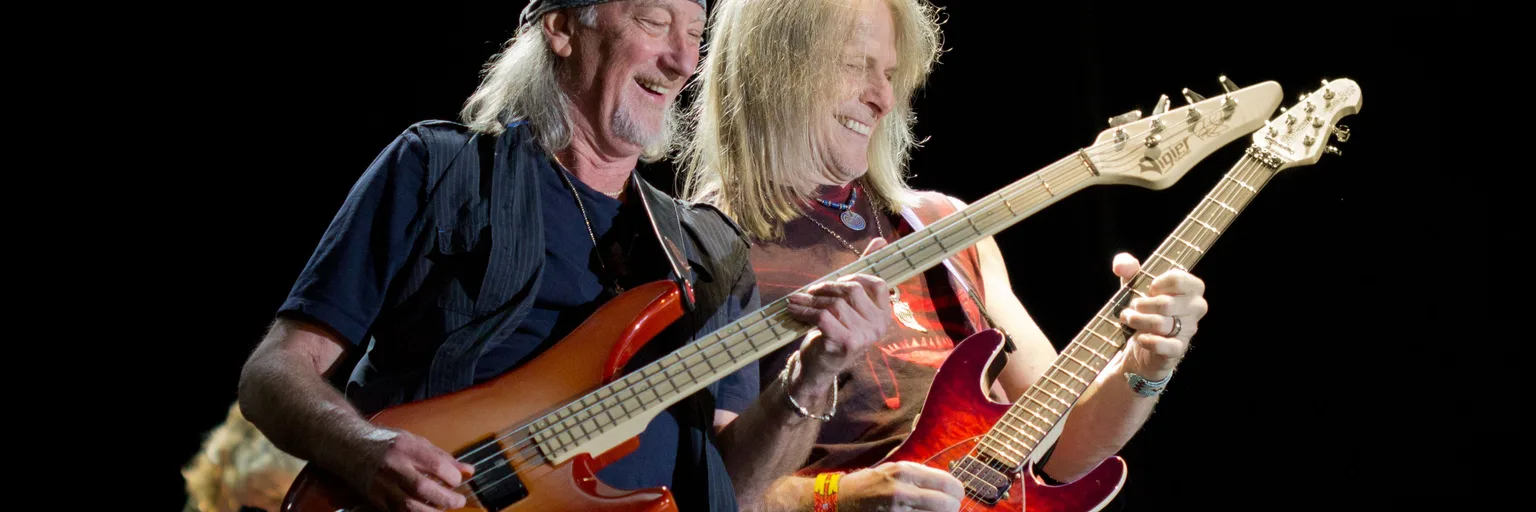
With their 24th studio album and a robust tour schedule, Deep Purple proves that legendary acts can still innovate and captivate audiences without resting on past glories.