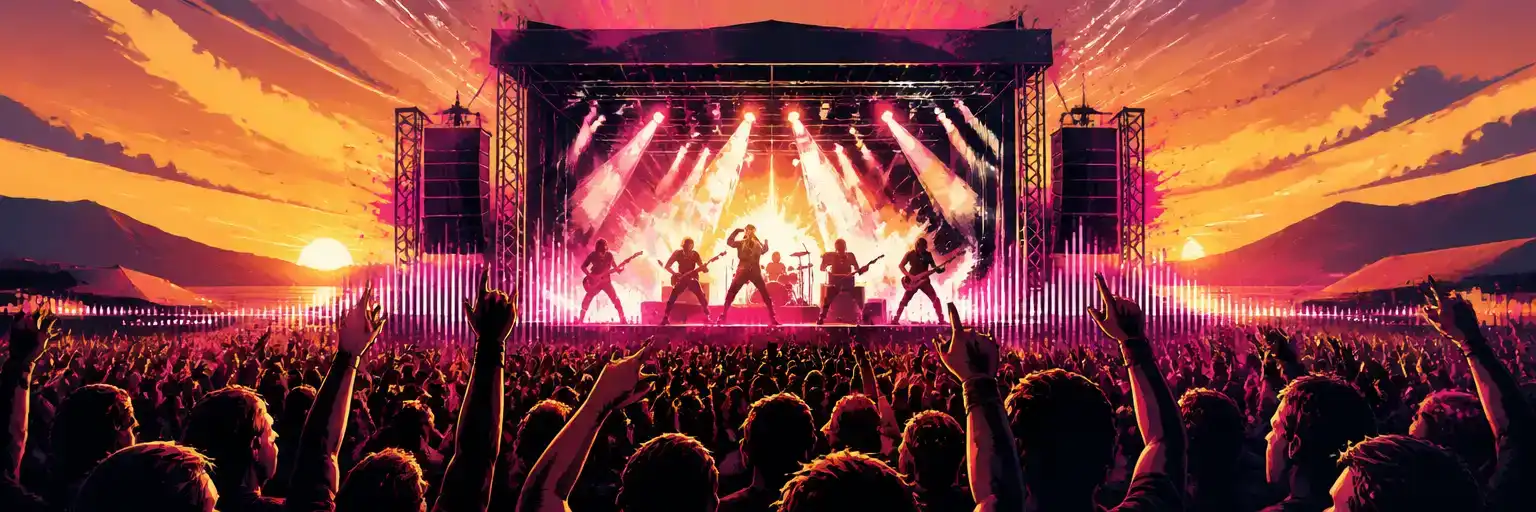
Foo Fighters' coming break is a sign of health, not retreat
Dave Grohl says the 2027 European run is the last tour of this cycle. A band at its peak stepping back is how legacy rock should work, not a cause for panic.
Photo: Roger Woolman / Wikimedia Commons (CC BY 3.0)
When did you last hear a band say "we're at our best, so we're going to stop for a while"? It almost never happens. The usual script says you tour until the crowds thin out, then you announce a farewell with a merch line attached. That is why Dave Grohl's comments this week matter more than a routine tour announcement.
Here is what happened. The Foo Fighters will play a European run next summer, including Düsseldorf on June 17, 2027, with further dates through September in places like Copenhagen, Bern and London. Speaking to the German news agency dpa, in a report carried by Süddeutsche Zeitung, Grohl called it "our last tour in this cycle" (our translation of the German "unsere letzte Tour in diesem Zyklus"). He added that afterward the band can step back for a while, though he doesn't know how long, and that they will keep doing other creative things.
A pause is not a breakup, and we should stop reading it as one
Notice what Grohl did not say. He didn't say farewell, and he didn't say hiatus with a date. He said "a while," and he said the band is always creative anyway. That is a scheduling statement, not an obituary. Still, the headline reflex in the industry is to treat any gap as a warning sign: dwindling demand, internal tension, a quiet end. We think that reflex is lazy.
The details point the other way. Grohl says the band is in top form, playing three-hour shows with 26 to 30 songs a night. According to Musikexpress, the new leg has 15 shows, following a North American stadium run that ended near Las Vegas and a Rock in Rio headline slot. The twelfth album, "Your Favorite Toy", only came out in April 2026. Nobody is fleeing a burning building. The band is leaving the table while the food is still good.
The best time to rest is when you don't have to
Rest is usually imposed on bands by injury, burnout or collapsing ticket sales. Choosing it at the peak is a different thing, and a rarer one. It protects the quality of the shows, which is the one asset a stadium band can't fake. Grohl insists nothing is played from tape or a computer and describes the shows as loose and still very raw. We take that at face value as his claim, but it also reads as the logic of the pause: a show that depends on three raw hours from a handful of musicians has a shelf life if you grind it nonstop.
There is also the human side, and here Grohl was oddly disarming. He described cooking dinner for the band on a day off in Australia, and realizing he was cooking for his other family. He called it corny and not very rock 'n' roll, but said that is how you survive 31 years. We'd go further: that is the actual business model. Longevity in a band is mostly relationships, and relationships need time away from the tour bus as much as time on it.
Why the industry should learn from this
The touring economy rewards the opposite behavior. Every cycle pushes bigger stadiums, longer legs and more territories. Grohl's own reason for returning to Europe is revealing: he felt last summer's run, with stadium shows in Munich and Berlin, was incomplete, with only one show in Italy and a handful in Germany. Put cynically, that is the market logic of "there are still places we haven't sold". Put generously, it is a musician who wants to finish what he started before stepping away. We prefer the generous reading, partly because the closing of a cycle is exactly what makes the pause credible.
The risk, of course, is on the other side. A break of unknown length is a gamble in a business that doesn't wait. Audiences move on, and rock's stadium tier is a small club. But we'd argue a band with 31 years behind it and a strong live reputation can afford the gamble far better than one that burns out and returns diminished. Grohl himself has had a busy few weeks, playing with AC/DC and sitting in on drums for Aerosmith, which suggests that "rest" for him probably means different projects, not a couch.
Our verdict
If you want to see the Foo Fighters in Düsseldorf or elsewhere next summer, treat it as what it probably is: a celebration of 31 years from a band that says it is in top form, not a last chance. Presale in Germany starts November 19 for Commerzbank and comdirect customers, with general sale on Eventim on November 20, per Musikexpress. And for everyone else in the business, from promoters to fans on comment threads, the lesson is simple. Stepping back at the top is not retreat. It is the only way many bands will still be worth watching at the next top.
No topics yet: start the first one.
More stories
Anitta's Grammy nod is real, but "global" is still a polite label
Anitta's latest Grammy nomination rewards an ambitious Brazilian album, yet it also shows how the Academy files her work. She should use it as leverage, not consolation.

The Cure's patience is the product, and it only works because the music earns it
Robert Smith is teasing 2027 dates and two finished albums while fans wait. Scarcity is The Cure's best asset, but only while the songs keep justifying the delay.
Juan Atkins helped build techno; the industry owes him more than tributes
Atkins' death at 64 closes the founding chapter of Detroit techno. Festivals and labels that profit from the genre should pay its originators in more than obituaries.
Turnstile said no to Metallica, and that's the smartest booking call of the year
Turning down a Metallica run isn't arrogance. For a band that just drew 60,000 to the National Mall, borrowing a legend's crowd costs more than it pays.