Phone bans at concerts work only if fans get something back
Ski Aggu's phone-free club tour is a fair answer to a crowd of screens, but it only works if it offers a real alternative and isn't just a clever marketing move.
Photo: Hannah Rodrigo hannahrodrigo / Wikimedia Commons (CC0)
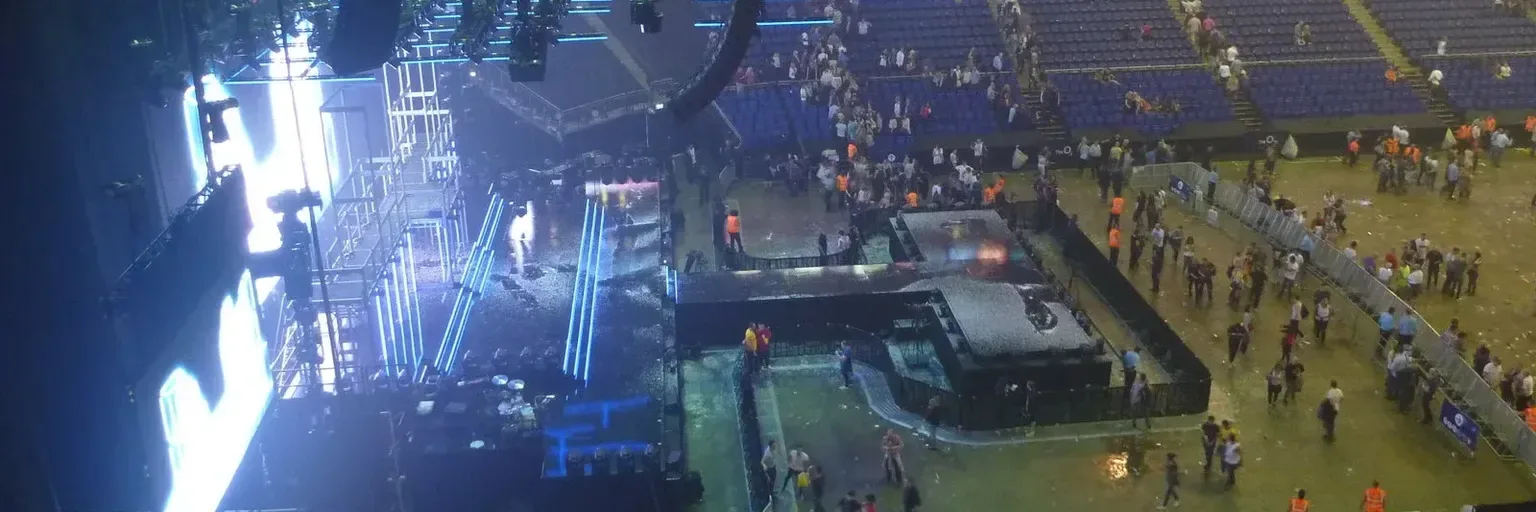
Who gets to decide what you do with your own memory of a night out? That is the real question behind every phone ban at a concert, and it is why Ski Aggu's latest announcement is more interesting than a quirky tour rule.
Here is the short version. The Berlin rapper, 28, announced the "Insider Tour 2027": ten club dates in Germany, Austria and Switzerland across February and March 2027, with phones "strengstens verboten" (strictly forbidden) during the shows. It follows his fourth album, "Ski Aggu Musik," released on October 16. The tour's motto is "Keine Handys. Keine Außenstehenden. Nur die, die wirklich dazugehören."
There is no bag check and no sealed pouch. As BZ Berlin reports, he is relying on trust: he thinks the audience will respect the rule.
The ban is fair, because the problem is real
Anyone who has stood behind a forest of raised arms knows the complaint. Even the Austrian ticketing outlet oeticket, which is hardly hostile to fans, admits that at many shows you can only see the performers through other people's screens. Ski Aggu's own explanation is disarmingly honest. He calls himself a "handysüchtige Person" (a phone-addicted person) and says collective use has gone too far. He isn't against filming in principle, and he points out that many nightclubs already work this way.
We find that framing more convincing than the usual lecture about "being present." It doesn't scold. It admits that a crowd, like a person, sometimes needs the temptation removed. A rule that everyone follows is easier to live with than willpower that everyone has to find alone.
The risk: a ban is not an experience
Here is where we push back. A ban only takes something away. If the night is merely the same night minus the phones, the fan has lost the ability to share it and gained nothing in return. The ban has to be paired with something that makes the room worth the sacrifice: a show that rewards attention, a venue small enough that closeness is real, a sense that you were there and others weren't.
Ski Aggu has a head start. A tour of clubs, from Rostock's Moya Kulturbühne to Vienna's Gasometer, in a relatively modest setting, fits the "insiders only" pitch better than any arena could. Keeping the audience small is the alternative, not just the rule.
What's missing, so far, is any sign of a way to share the night afterward. The announcement as reported doesn't mention official photos, a post-show clip or any other content for fans who can't film. That is a gap. A ban that pushes all sharing into the artist's own hands starts to look like control, not community.
Is this a gimmick? The sales numbers won't tell us
Cynics will say that "what happens here stays here" is a marketing line. Honestly, it is one. Scarcity is a great way to sell tickets, and oeticket suggests that the Vienna show will sell out in no time, perhaps precisely because phones are banned. That's an expectation, not a result, and we'd treat it as a prediction.
But a rule can be good and profitable at once. What matters is consistency. Oeticket notes that Iron Maiden and Ghost have asked fans to keep phones in their pockets, and that Bob Dylan and Phoebe Bridgers go further and have phones locked away. BZ Berlin adds that RIN and Schmyt named their joint tour "No Phones Allowed." That is a wider pattern than a single publicity stunt, and it suggests many artists are tired of facing a wall of displays.
The counterargument deserves respect too. Oeticket points out that smaller acts gain attention from fan videos, and that Chappell Roan's career benefited from them going viral on TikTok at no cost to her. Ski Aggu built his own audience on TikTok and Instagram. The irony is obvious, but it also explains why a ban makes sense for him now: he can afford it, because the viral part has already happened. A newcomer probably couldn't.
Our verdict
Ban the screens if you must, but earn it. Our view: phone-free shows are a good idea for artists who already have an audience, play rooms small enough for intimacy, and give fans a reason to feel they got something unique. They are a poor idea as a blanket policy for acts that still need discovery, or as a cheap way to look authentic.
Ski Aggu's trust-based approach is the right place to start. If fans respect it, the tour will prove that a crowd can be asked, not forced. If they don't, the ban will have been just a slogan. We hope it works, and we'd like to see the next artist add something to the night, not just subtract.
No topics yet: start the first one.
More stories
Maiden's first-nine-albums setlist is a bet on the show, not the catalog
Iron Maiden's São Paulo shows lean on the band's first nine albums. It's a smart gift to fans, but it quietly says the present tense is no longer the point.

Harry Styles' 2027 stadium run is bigger, but still not ordinary
Twenty-five new stadium dates in 12 cities move Styles from residency events to a global run. Scarcity is thinner now, but the design still protects the magic.
Rush at the Sphere only works if it refuses the residency script
A Las Vegas residency suits a band obsessed with precision, but only if Rush resists the greatest-hits-in-a-giant-screen template and keeps its odd, exacting spirit.
Gims' postponed tour shows how fragile arena rap has become
Thirteen dates pushed back to 2027 and 2028, three days before opening night: the real story is how little slack arena-scale touring leaves for a single body.