BTS in São Paulo: four screens, twelve-screen expectations
Cutting the video setup from 12 LED panels to four on the South American leg isn't a logistics footnote. It's a product change fans should have been told about before paying.
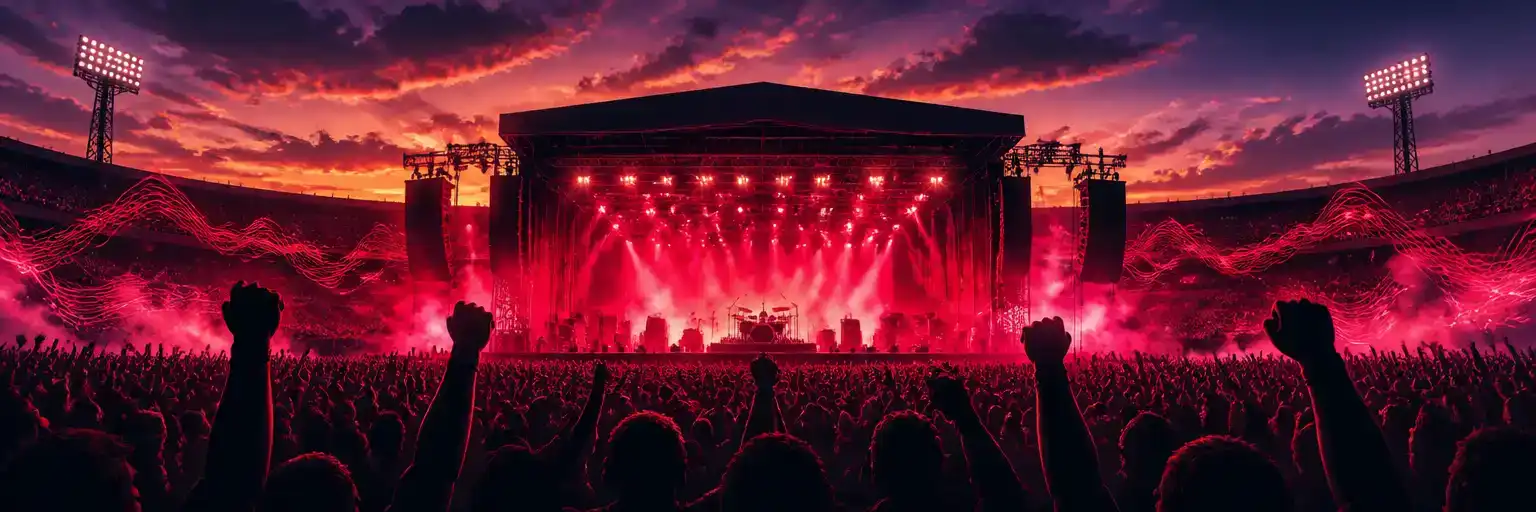
AI-generated image
If the same ticket buys you a different show depending on the continent, is it still the same ticket? That is the question hanging over the Morumbi stadium in São Paulo this week, where BTS opens a run of three sold-out nights on October 28.
Here is the short version. According to Terra, the Arirang tour used 12 LED panels in Asia, Europe and North America, while the South American leg has four. Fans objected, and Procon-SP and the national consumer secretariat, Senacon, notified the companies involved. The São Paulo public prosecutor's office also asked for explanations about differences between the sector map used at ticket sales and the technical plan published by the city. Live Nation, in a statement dated October 26, blamed logistical and scheduling limits.
"Logistics" is an explanation, not a justification
We can't know what the real constraints were, and the documentation doesn't say. Shipping and installing a larger video system across a continent is plausibly hard. But notice what that explanation concedes: the limit was presumably known to the organizers. A promoter that knows the production is smaller has the information needed to tell buyers before they click "pay." The outrage came from fans discovering it, not from being informed.
The Estadão report says the producer presents the four screens as a 360-degree experience. Maybe so. But "different" is not "equivalent," and in a stadium, screens are not decoration. For anyone far from the stage, they are the show.
Sightlines are the real product
At a stadium concert, most of the crowd sees the artist as a speck. The video wall is what turns a distant seat into an event. Fewer screens probably means more seats with a worse, or more angled, view. We think that's the part fans understood intuitively, and it explains why the anger landed on the organizers rather than the band; Terra notes the complaints are aimed mainly at the producers, not the members.
The sector-map issue makes it worse. When the map shown at sale doesn't match the plan published by the city, which reportedly included sectors not disclosed, the buyer can't judge what a seat is worth. That is a pricing problem as much as a production one.
Disclosure first, refunds where the view is demonstrably worse
Our position is simple. A mega-act with a sold-out stadium has all the leverage, and that is exactly when transparency is cheapest to skip. Demand was never going to collapse: tickets sold out. That's the uncomfortable part. When a show is guaranteed to fill, the incentive to over-explain is close to zero.
So the standard should be this: if the production differs materially from the one advertised or widely known, say so at the point of sale. And where a specific seat has a verifiably worse view than the map promised, fans should be able to ask for a refund or a relocation. Not every disappointed Army member is entitled to money back; "I expected more screens" is a feeling, not a defect. But a mismatched map is a documentable one, and consumer agencies are right to press on it.
We would not overstate the harm either. According to Estadão, the band is playing a 23-song setlist, including two surprise songs, after seven years away from Brazil. Many fans will leave happy, and some of the fury is probably social-media amplification. Still, a good night doesn't erase the principle.
The verdict
The lesson isn't that Live Nation is uniquely cynical; we have no evidence for that. It's that South American fans risk getting a lighter version of the product at the same price, with the explanation arriving after the money. Promoters should publish the video and stage specs per market before sales open. Regulators should keep asking for the seat maps. And fans, before the next tour announcement, should treat "same show" as a claim to be verified, not a given.
No topics yet: start the first one.
More stories
Coldplay's 59% cut leaves touring's biggest stars with no excuses
Coldplay says its direct tour emissions fell 59% against its previous stadium run. That puts the burden of proof on every other headliner who claims a big show can't be greener.
Jay-Z picked Jay-Z, and the halftime stage is now a closed loop
Headlining Super Bowl LXI after years of curating the show is the natural end of the mogul playbook, but it leaves the NFL, Roc Nation and the artist as one circle.
Phone bans at concerts work only if fans get something back
Ski Aggu's phone-free club tour is a fair answer to a crowd of screens, but it only works if it offers a real alternative and isn't just a clever marketing move.

Maiden's first-nine-albums setlist is a bet on the show, not the catalog
Iron Maiden's São Paulo shows lean on the band's first nine albums. It's a smart gift to fans, but it quietly says the present tense is no longer the point.